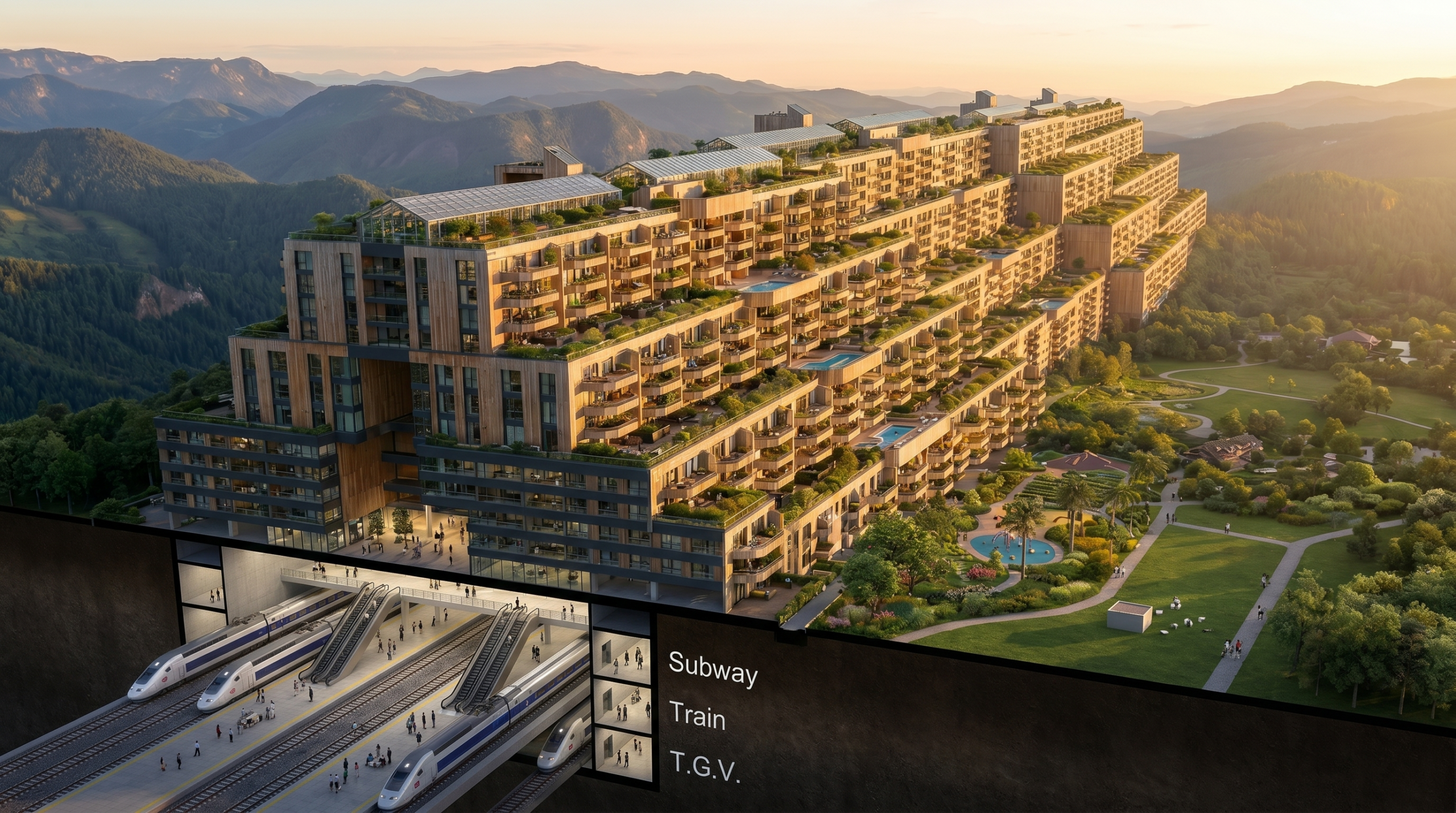
According to Gilles Gauthier
Reimagining the City : High Density, Without Sacrificing Nature
A response to the challenges of the lack of housing, transportation, the environment, climate change, and social isolation.
What Is Linear City?
Developed by architect Gilles Gauthier, Linear City is an urban planning concept designed to reduce land use while improving livability. It brings together compact development, preserved natural systems, and efficient mobility in a form that supports both daily life and long-term resilience.
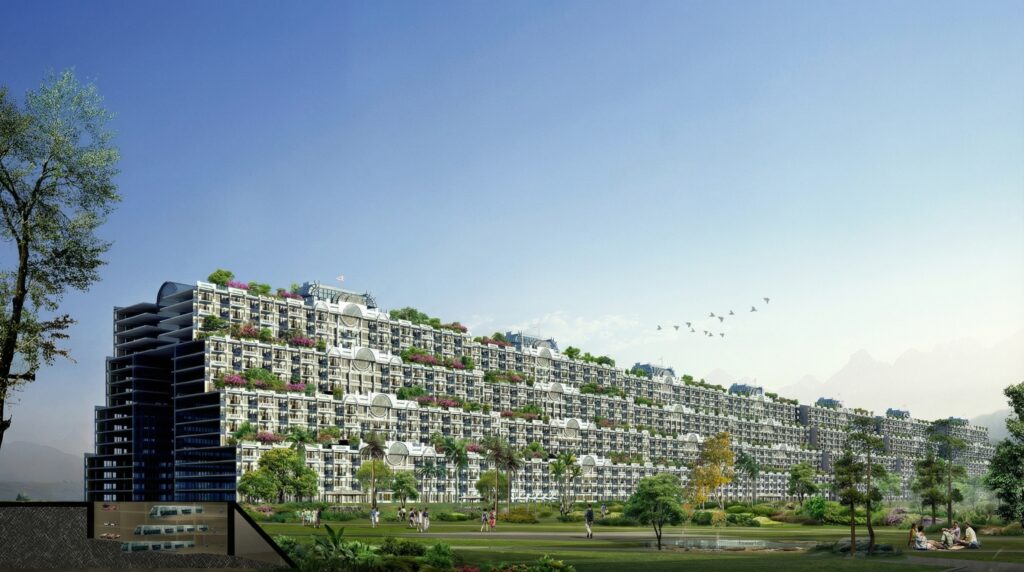
High-density
Human-scaled neighborhoods
Integrated
Underground public transit
Reduced
Land consumption
Vision
Cities Designed Around People
The Linear City model rethinks growth by organizing urban life around accessibility, proximity, and shared public infrastructure. Instead of spreading outward, it concentrates development in a way that supports walkability, social connection, and everyday convenience.
Its vision is both practical and aspirational: create places where housing, transit, and nature work together, giving planners and communities a framework for sustainable development that remains grounded in human experience.
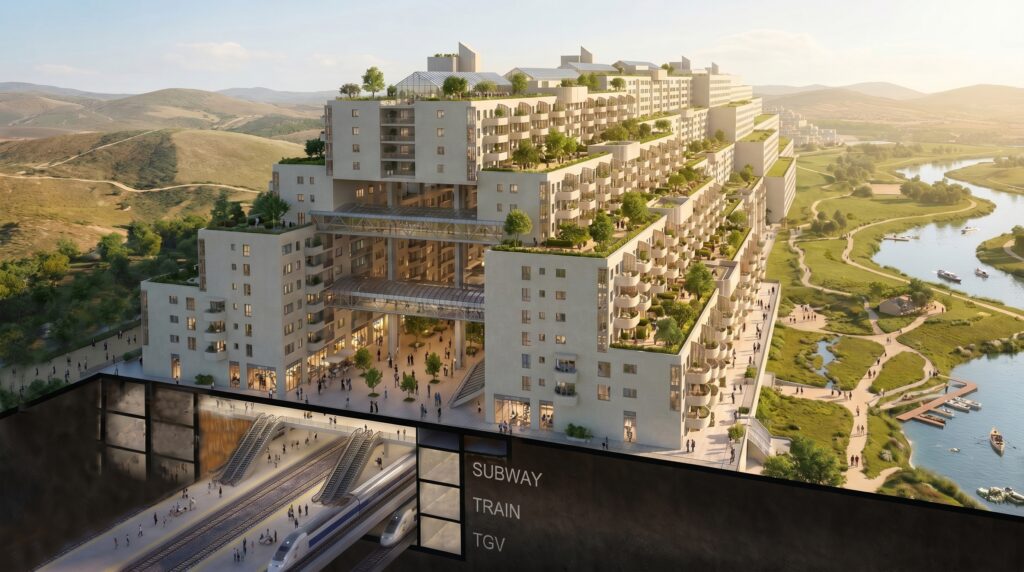
Benefits
Why the Model Matters
Today’s cities and transit networks are relics of a bygone era. Advances in technology now offer us an unprecedented opportunity to reinvent the way we live and move.
The Linear City proposes a progressive transformation of our territory to finally unite urban vitality with the serenity of nature.
95% Less Urban Sprawl
Restore ecosystems and preserve natural land.
Faster, Smarter Transit
An underground network designed to outperform private automobiles.
Reinventing Neighborhood Life
Village-inspired communities designed to strengthen social connection.
A Sustainable Response to Urban Challenges
Housing, mobility, and climate change.
Get in Touch
Interested in the Linear City project? Contact us to discuss the concept, explore potential collaborations, or learn more about the vision behind the project.